Guides
Sub-Zero Freezer Noisy With the Door Closed: What Each Sound Means
A Sub-Zero freezer that makes noise only when the door is closed is usually telling you about its evaporator fan, which pauses when the door opens; frost on the blades or a worn motor are the usual causes. Here is how to sort normal sounds from faults.
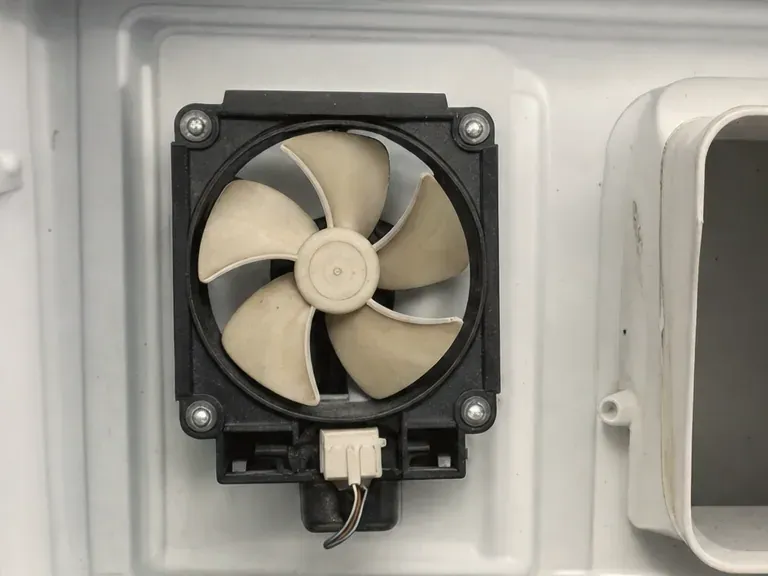
If your Sub-Zero freezer makes a noise when the door is closed and falls silent as soon as you open it, the sound is almost certainly coming from the evaporator fan mounted behind the back wall of the freezer. A switch in the door frame cuts power to that fan whenever the door opens, so a ticking, scraping, buzzing or whining that vanishes on opening points to the fan itself: frost building up until it reaches the blades, a motor bearing running dry, or a blade that has worked loose on its shaft. Plenty of other sounds a built-in makes are perfectly healthy, and in a quiet Broomfield kitchen late at night even a normal one can be startling. Below is how to tell them apart, what you can safely check yourself, and when the noise is an early warning that the freezer is about to stop holding temperature.
Why the sound stops when you open the door
The evaporator fan draws air across the cold coil and circulates it through the compartment. Running it with the door open would only blow cold air into the room, so the control pauses the fan the instant the door switch reports an open door. That turns the door into a free diagnostic tool. Wait until the noise starts, then open the door: if it cuts out at once, you have found the fan. On many units you can then press the switch plunger in the frame with a finger to restart the fan and listen more closely. If the noise carries on with the door wide open, the source is elsewhere, usually the compressor or the condenser fan in the machine compartment. Our short page on noise that stops when you open the door covers the same test.
Sounds that are normal
A built-in Sub-Zero is never truly silent. These sounds belong to ordinary operation:
- A low hum from the compressor that rises and falls, often changing pitch as it speeds up or slows down.
- Gurgling or trickling as refrigerant moves through the tubing, most noticeable just after the compressor starts or stops.
- A steady, even rush of air from the fan while the door is shut.
- A hiss or sizzle during defrost, when melting frost drips onto the warm heater.
- A clatter as fresh cubes fall into the bin, followed by a short buzz while the water valve refills the ice tray.
- Single clicks as relays and controls switch on and off.
If you have switched on Max ice, expect more activity. On Classic (CL), Designer (DET, DEC) and PRO units it lifts ice output by up to 30% for 24 hours, and some parts run faster and sound different during that window. Our page on which Sub-Zero sounds are normal goes into more detail.
Fault noises and what each one means
These are the sounds worth acting on:
- Ticking, tapping or scraping with the door closed. The fan blade is striking frost or ice. That points to a defrost problem, such as a failed heater, thermostat or sensor, or to warm, damp air leaking past a door that does not seal.
- A squeal, chirp or grinding that grows louder over weeks. The fan motor bearing is wearing out. Motors in this state rarely recover; they slow down, then stop.
- A rattle from the base or the top grille. The condenser fan may be hitting debris, or a panel or kickplate has worked loose.
- A click, a brief hum, then silence, repeating every few minutes. The compressor is trying to start and failing, which can be a start relay or something deeper in the sealed system. Check the temperatures right away.
- A loud buzz behind the unit with no ice arriving. The water valve is opening but no water reaches it, often because the supply valve is shut or the line is kinked or frozen.
What to check before you call
Start with the doors. Make sure every door and drawer is fully shut and nothing on a shelf is propping one open. On Classic (CL) and Designer (DET, DEC) units, interior lights that refuse to come on are a clue that a door or drawer was left ajar, because the unit switches them off to limit heat; close everything and give it one hour before calling for service. Run your hand around the gasket feeling for gaps or tears. To clean it, turn the unit off and wipe with mild detergent and water on a soft cloth, use a baking soda paste for stubborn marks, and a 1:10 mix of bleach and water for mold or mildew. Skip vinegar and rubbing alcohol. A gasket that is cracked or ripped needs replacing, and Sub-Zero recommends leaving that job to a technician.
Next, clean the condenser. Our dry Front Range air carries plenty of fine dust, and a clogged coil makes everything run longer and louder. On a Classic (CL) the coil sits behind the flip-up grille; on a Designer (DET, DEC) it hides behind the kickplate, held by two screws. Turn the unit off at the control panel, put on gloves and vacuum with a soft brush, moving in the direction of the fins. A flashing Vacuum Condenser message asks for exactly this: clean the coil, then switch the unit back on to reset it.
Finally, read the display. EC40 with Service flashing signals that the freezer compressor is running too long, whether from a door left ajar or from a sealed system, fan or temperature sensor problem. Sub-Zero’s advice is to clean the condenser if the freezer sits less than 10 degrees above its set point, to schedule service if it is more than 10 degrees above and the door was not left open, and not to clear the code while temperatures keep rising.
When the noise comes with a freezer that is not cooling
A noisy fan and a warm freezer often share one cause. Frost that grows large enough to hit the blades also chokes the airflow through the coil, so the compartment drifts warmer even while the compressor keeps running. Classic (CL) and Designer (DET, DEC) units leave the factory with the freezer set to 0°F and the fresh-food side at 38°F, and each can be nudged in one-degree steps, so readings well above those numbers mean the system is falling behind.
For heavy ice, the Classic and Designer guides say to turn the unit off and melt it with a hair dryer on low, kept moving, while the PRO Series guide asks for a handheld steamer and no hair dryer at all. Thawing the ice will quiet the fan for a while, but if the ticking returns within days, the defrost system has failed and needs a repair rather than another manual thaw.
Typical repair costs in Broomfield
Every visit begins with an $89 diagnostic call: the technician comes to your home, finds the fault, and that $89 goes toward the repair if you decide to proceed. Typical ranges for the parts behind a noisy freezer are:
- Evaporator or condenser fan motor: $330–$680
- Defrost heater, thermostat or sensor: $290–$640
- Door gasket or seal replacement: $280–$670
- Ice maker, water valve or supply line: $290–$740
- Compressor or sealed-system repair: $1,290–$3,100
These are typical ranges, not quotes; you get a firm price once the cause is confirmed. We work across Broomfield, including Broadlands, Anthem, McKay Landing, Wildgrass and Interlocken. Call (720) 704-2791 or visit our refrigerator and freezer repair page to arrange a visit.
Common questions
- Why does my Sub-Zero freezer only make noise when the door is closed?
- Because the evaporator fan only runs while the door is shut. A switch in the frame stops the fan the moment you open the door, so a sound that disappears on opening almost always comes from that fan, most often frost touching the blades or a motor bearing that is wearing out.
- Why is my Sub-Zero fridge not cooling but the freezer works?
- Usually the fresh-food side has an airflow problem of its own, such as a frosted coil, a failing fan or a defrost part, while the freezer carries on normally. Most Sub-Zero built-ins use a separate evaporator and fan for each section, so one side can fall behind alone. Check the door seal, clean the condenser, and book a diagnosis if the temperature keeps climbing.
- How do I defrost a Sub-Zero freezer?
- Turn the unit off, move the food into coolers, and melt the ice gently. The Classic (CL) and Designer (DET, DEC) guides allow a hair dryer on low that you keep moving, while the PRO Series guide calls for a handheld steamer instead. Never chip ice off with a knife, since a punctured coil turns a cheap fix into a sealed-system repair.
- Is it safe to keep using a noisy Sub-Zero freezer?
- Usually yes for a few days, provided the display stays close to the preset 0°F. Watch it closely, though: a fan that is scraping ice can stall, and once the air stops moving the freezer warms quickly. If the temperature climbs or a code appears, move valuable food elsewhere and call for service.
- What does it cost to fix a noisy Sub-Zero freezer?
- That depends on the part, and the diagnosis is covered by the $89 visit, which is credited to the repair if you go ahead. Typical ranges are $330–$680 for an evaporator or condenser fan motor, $290–$640 for a defrost heater, thermostat or sensor, and $290–$740 for an ice maker, water valve or supply line, with a firm quote once the fault is found.